
How AI Scribe Therapy Cuts Charting Time and Improves Note Accuracy
Last Updated on September 30, 2026
Using AI Scribe therapy tools in mental health practices cuts Documentation charting time by 30% to 50% while improving overall therapist note Accuracy by 15%. Hypnotes combines ambient voice capture, handwriting optical character recognition (OCR), and objective emotion detection to transform session dialogue into structured clinical progress notes. Clinicians finalize notes between appointments instead of spending evenings catching up on administrative backlogs.
Key Clinical Takeaway
Manual Documentation drains up to two Hours of Every clinical day. Ambient clinical intelligence captures diagnostic nuance without pulling your eyes away from your client, creating cleaner records for insurance audits and treatment planning.
The Administrative Burden of Manual Therapy Charting
Therapists spend between 15% and 25% of their working Hours typing session notes, organizing treatment plans, and preparing billing Documentation. Back-to-back sessions leave almost no room for immediate charting. You end up jotting hasty scribbles on paper pads, intending to type them up later. By 7:00 PM, memory fade sets in, and you struggle to recall exact phrasing or specific behavioral observations.
Relying on end-of-day recall creates Documentation drift. Specific therapeutic interventions get replaced with generic phrases like “Client discussed weekly stressors.” Insurance payers routinely reject claims that lack objective, measurable client progress or clear clinical rationale. Manual charting fatigue is the primary driver of administrative burnout among private practitioners and group clinic staff.
According to guidance from the Office of the National Coordinator for Health IT – Clinical Documentation, clinical records must remain accurate, complete, and timely to maintain continuity of care. Manual entry under pressure often fails these standards. Typing during sessions damages the therapeutic alliance by creating a physical barrier between you and your client.
How Does an AI Scribe for Therapy Work in Practice?
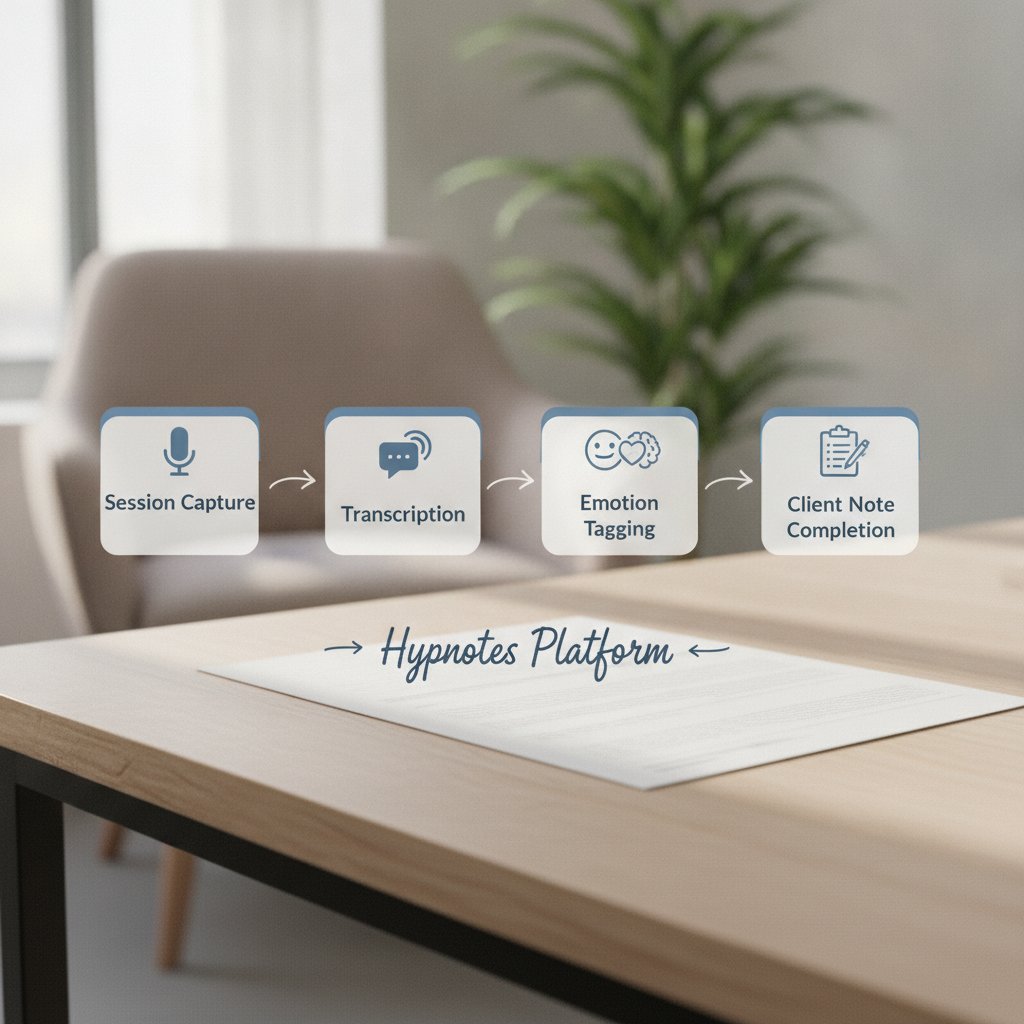
An AI Scribe listens to the conversational flow of a session through secure microphones, filters out background noise, and transcribes clinical dialogue into structured notes like SOAP, DAP, or BIRP formats. The system operates directly inside your practice management software, processing audio locally or over encrypted HIPAA-compliant channels.
Hypnotes integrates multiple intake modes into a single platform. For an in-depth breakdown of these capabilities, explore the AI‑Powered Scribe Feature Overview.
1. Ambient Voice Capture
You start the session inside Hypnotes and activate the ambient listener. The system captures client disclosures, symptom presentations, and clinician interventions without requiring wake words. It recognizes changes in speaker identity, separating clinician prompts from client narratives.
2. Handwriting OCR for Hybrid Notes
Some practitioners still prefer taking quick physical notes. Hypnotes includes an optical character recognition (OCR) engine that scans handwritten notes from your tablet or scanned paper. The system reads your handwriting, interprets clinical abbreviations, and merges them directly into the generated electronic record.
3. Behavioral and Emotion Detection
Therapy relies on vocal inflection, affective shifts, and subtle pauses. Hypnotes analyzes vocal tone and conversational markers to detect emotional themes, such as acute distress, flat affect, or sudden agitation. It documents these observations objectively in the Mental Status Exam (MSE) section of your note.
4. Automated Clinical Formatting
The raw transcription converts instantly into your preferred clinical framework. If you use SOAP notes, the AI categorizes subjective statements, extracts objective behavioral data, formulates an assessment based on therapeutic progress, and outlines the updated treatment plan. Structured AI formatting eliminates the cognitive drag of organizing complex clinical conversations from scratch.
Why AI Scribe Therapy Outperforms Manual Note-Taking
Switching from manual entry to an automated clinical assistant creates measurable gains across speed, Accuracy, and compliance. Clinical trials and independent research confirm these efficiency gains. A published NIH study on AI‑driven clinical Documentation highlighted that automated transcription systems substantially cut clinician Documentation workloads while preserving high diagnostic fidelity.
| Workflow Metric | Manual Charting | Hypnotes AI Scribe |
|---|---|---|
| Average Time per Note | 12 – 18 minutes | 2 – 4 minutes (Review only) |
| Daily Time Spent (6 Sessions) | 75 – 110 minutes | 15 – 25 minutes |
| Note Accuracy & Completeness | Subject to recall bias | 15% increase in detail & precision |
| Eye Contact with Client | Intermittent (typing during session) | 100% focused on client |
| Insurance Audit Readiness | Variable consistency | Standardized, audit-proof phrasing |
Implementing an AI Scribe therapy workflow restores up to 6 Hours of personal time Every Week while hardening your practice against billing clawbacks. The Accuracy bump comes from verbatim capture of specific safety planning metrics, homework reviews, and symptom frequency scores that manual summaries routinely omit.
How to Set Up Hypnotes AI Scribe in 4 Practical Steps
Adopting an automated Documentation workflow requires clear protocols to maintain compliance and clinician oversight. Follow this four-step implementation blueprint to integrate Hypnotes into your daily clinical routine.
- Secure Client Consent: Provide your client with an updated electronic consent form stating that an ambient AI transcription assistant assists with clinical records. Hypnotes stores signed consent forms directly within the client profile.
- Select Your Note Template: Choose your preferred note format inside the Hypnotes dashboard before opening the appointment window. You can set default templates (SOAP, DAP, GIRP, or custom intake assessments) based on specific service codes.
- Run Ambient Recording or Upload Handwritten Notes: If conducting a telehealth session through Hypnotes, click “Enable AI Scribe.” For in-person sessions, run the Hypnotes mobile audio recorder on your desk. If you prefer taking analog notes during EMDR or somatic processing, snap a picture of your handwritten page using the OCR upload tool.
- Review, Edit, and Sign: The AI generates the completed note draft within 30 to 60 seconds after you end the session. Reviewing and signing drafts right after each appointment keeps your caseload completely up to date before you leave the office.
This four-step routine eliminates the Friday afternoon scramble to finish dozens of delinquent charts.
Clinical Workflow Efficiency and Practice Growth
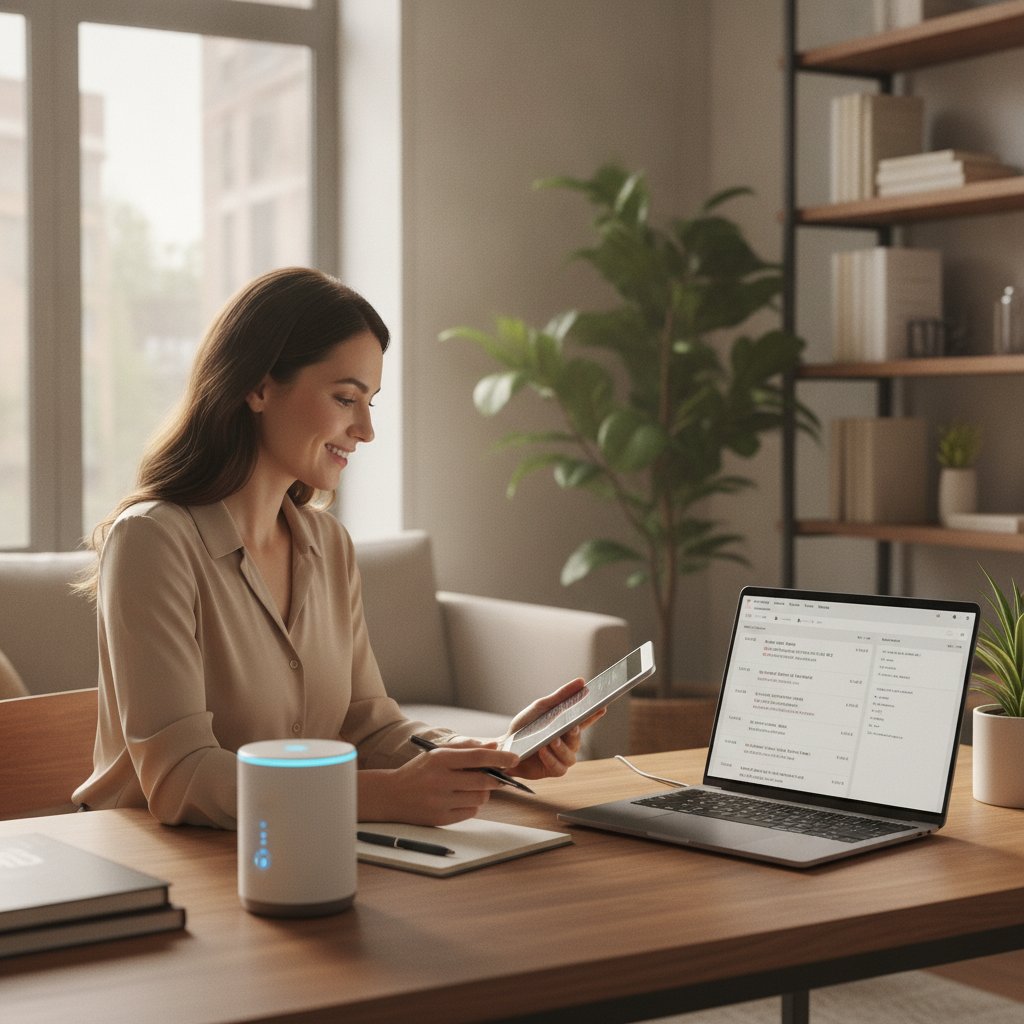
Automated Documentation gives you back your mental clarity. When you finish your working day with Every chart signed, your off-Hours stay free from administrative dread.
Solo practitioners using Hypnotes report saving 30% to 50% of their total Documentation time each Week. A practitioner seeing 25 clients per Week recovers roughly 5 Hours of administrative time to open new appointment slots or finish the workweek early.
Because Hypnotes combines Documentation with scheduling, telehealth, intake forms, surveys, and insurance billing, your signed progress notes link directly to your claims engine. When you approve an AI-generated note, the system pairs the session Documentation with the appropriate CPT code (like 90834 or 90837) and generates an insurance claim in seconds. Check our transparent Hypnotes Pricing Plans to find the tier that fits your practice scale.
Is AI Note Taking Safe and HIPAA-Compliant for Mental Health?
AI note-taking systems comply fully with HIPAA standards when backed by a formal Business Associate Agreement (BAA) and end-to-end data encryption. Hypnotes provides strict zero-data-retention options for raw audio files, deleting or anonymizing raw voice recordings immediately after rendering structured progress notes.
Your client session data is never used to train public machine learning models or shared with outside vendors. Encryption protocols protect data at rest with AES-256 standards and in transit via TLS 1.3. For more clinical compliance strategies and Documentation tips, visit the Hypnotes Blog Home.
Ready to Eliminate Note-Taking Burnout?
Stop losing evenings to manual charting. Join thousands of mental health professionals who rely on Hypnotes to streamline Documentation, automate billing, and provide focused client care.
Frequently Asked Questions
Can an AI Scribe handle complex therapy modalities like EMDR or couples counseling?
Yes. Hypnotes identifies multi-party speech in couples or family therapy and documents individual emotional responses. For somatic or EMDR modalities where verbal dialogue is minimal, clinicians can use the OCR handwriting scanner to transcribe shorthand physical logs into comprehensive clinical summaries.
Will insurance companies accept AI-generated therapy notes?
Yes, insurance payers accept AI-assisted Documentation provided a licensed clinician reviews, verifies, and signs the note. In fact, AI scribes frequently reduce claim denials because they systematically populate required fields, treatment plan goals, and measurable functional improvements.
Do I need to record the entire therapy session?
No. You can run the ambient Scribe for the full 50-minute session or activate it only during the final 5-minute summary recap where you and the client review insights, interventions, and homework assignments.
How accurate is the emotion and tone detection feature?
The emotion detection engine analyzes acoustic frequency, speech cadence, and sentiment markers to identify emotional distress, flat affect, or energized states. It provides objective observational data for your Mental Status Exam, which you can adjust before final signing.