

Predictive Analytics No Shows: AI Forecasting: Stop No-Show
Last Updated on October 27, 2026
You want to stop No-Shows. Predictive Analytics No Shows prevention uses historical patient data to calculate a probability score for every upcoming Appointment. By spotting high-risk visits before they happen, we can intervene with targeted reminders. This isn’t just about better scheduling; it’s about shifting from reactive scrambling to proactive patient retention, directly cutting the financial and clinical hit from empty chairs.
Why Generic Reminders Fail Therapy Practices: Predictive Analytics No Shows Explained
Most Therapy Practices treat all No-Shows the same way: you send a blanket reminder to everyone. It looks professional, sure, but it ignores the specific behaviors that actually drive cancellations. Generic reminders treat every patient as the same risk, ignoring the specific behavioral triggers that actually drive cancellations.
Think about it. One patient canceled their last two sessions because of work conflicts. Another only cancels when they feel unsure about the therapeutic approach. Neither responds well to a standard “Your Appointment is tomorrow” text. The first needs a flexible reschedule option. The second needs a brief, personal check-in call.
When you track things manually, you miss these critical nuances. You get tired. Mistakes happen. The data just sits there in your calendar, static and useless, until the Appointment is already gone. HealthIT.gov points out that Predictive Analytics in healthcare goes beyond simple reporting to Forecast outcomes. For behavioral health, that means we predict who will show up long before the day even begins.
Automated messages often feel impersonal, even mechanical. When clients face emotional friction, ambivalence about difficult therapeutic homework, or external life stressors, a simple alert rarely addresses the hesitation keeping them from walking through your door. Without that targeted context, reminders just highlight an obligation instead of opening a supportive dialogue.
How AI Appointment Forecasting Works Under the Hood
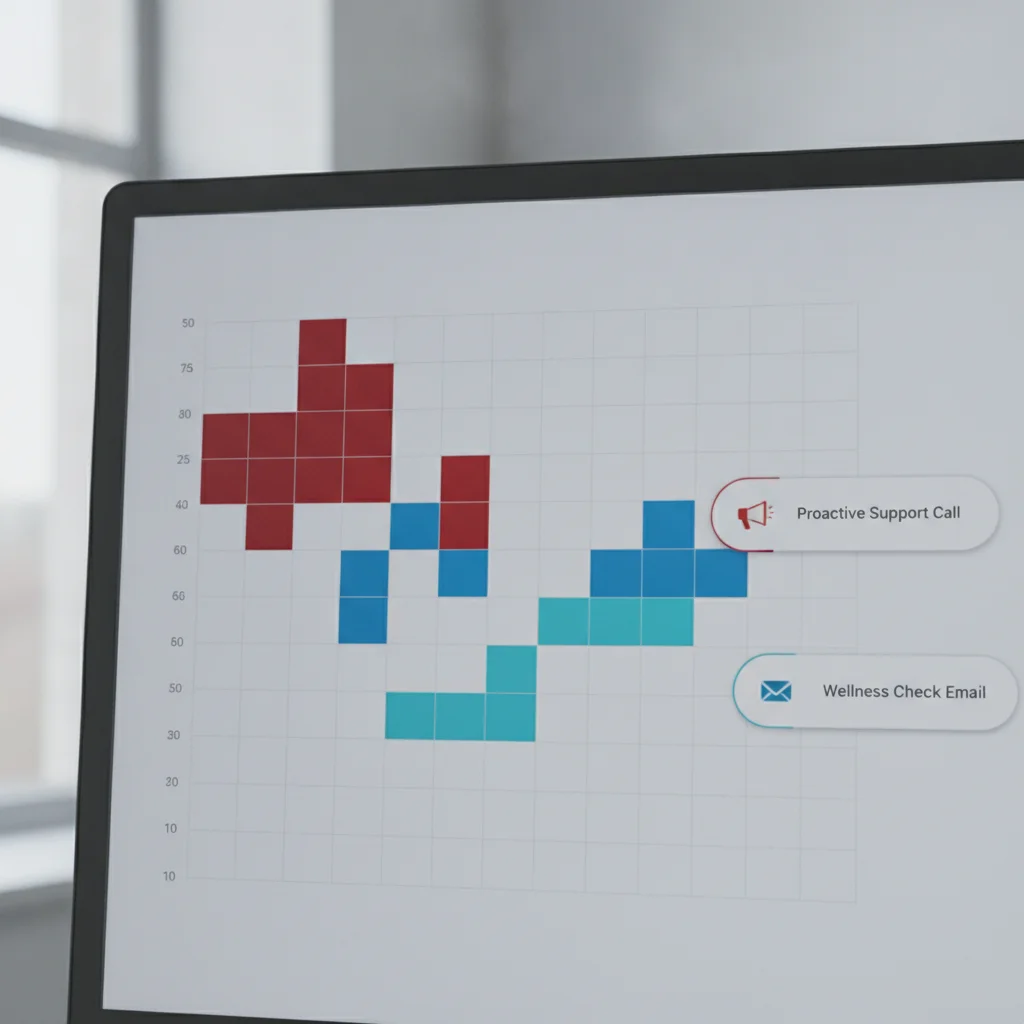
At its core, the model processes three data streams: historical attendance, patient demographics, and external factors like the day of the week. It doesn’t guess. It calculates.
The algorithm assigns a weight to each variable. A patient who’s attended 50 consecutive sessions carries a different weight than someone in their second week. A Tuesday afternoon slot often sees higher No-show rates than a Thursday morning slot, especially in Practices serving working professionals.
Here’s the critical distinction: The system doesn’t just flag potential No-Shows; it assigns a probability score (0-100%) to every single scheduled visit. This score updates in real-time as new data comes in. If a patient misses a rescheduled session, their future scores jump immediately.
The Data Loop
Input: Check-in status, cancellation reason, session time.
Processing: Weights applied based on historical cohort behavior.
Output: Risk score displayed in the daily schedule view.
Action: Staff triggers specific outreach protocol based on score tier.
This isn’t magic. It’s simply math applied to your specific practice history. The more data you feed the model, the sharper its predictions become. This is exactly why NCBI studies on Predictive Analytics emphasize the value of longitudinal data over static snapshots.
As sessions accumulate, the model continuously recalibrates. It recognizes patterns: seasonal variations, weather shifts, Appointment cadence, and spacing between sessions. For instance, if appointments three weeks apart show double the attrition rate of weekly sessions, the algorithm notes it. The scoring engine evaluates these factors simultaneously, giving clinicians an objective baseline that would be virtually impossible to track manually across dozens of active client charts.
Step-by-Step: Enabling No-Show Forecasts in Hypnotes
Setting this up takes less than ten minutes. You don’t need a data scientist. You need a clear process. Here’s exactly how we configure it in Hypnotes:
- Navigate to Settings > Analytics. Enable the “No-Show Prediction” module. This turns on the background processing engine for your calendar.
- Define your Risk Tiers. We recommend three tiers for manageable workflows. Low Risk (0-30%): Standard reminder. Medium Risk (31-60%): Dual-channel reminder (SMS + Email). High Risk (61-100%): Phone call required.
- Set the Lead Time Window. Choose how far out the system calculates scores. For most Therapy Practices, a 48-hour window works best. It gives staff enough time to intervene without overwhelming their workload.
- Map Outreach Tasks. Link your risk tiers to automatic task creation in the staff dashboard. A High Risk flag should generate a “Phone Call” task assigned to the front desk or the therapist.
- Review the Dashboard. Open the daily schedule view. You’ll see a colored badge next to each Appointment – green, yellow, or red. No guessing required.
Notice what we’re *not* doing here. We aren’t asking staff to memorize patient histories. We aren’t relying on gut feeling. The system surfaces the risk, and human judgment handles the relationship. That balance is key to ethical, effective practice management. Implementing these simple steps gives your team a powerful tool to proactively manage patient attendance.
Practical Outreach Strategies by Risk Tier
Knowing a patient is high-risk is only half the battle. You need a clear protocol for what to do next. Here’s a framework that works in real-world settings:
| Risk Tier | Probability | Recommended Action | Goal |
|---|---|---|---|
| Low | 0-30% | Automated SMS 24h prior | Confirmation |
| Medium | 31-60% | SMS + Phone Call 48h prior | Reaffirmation |
| High | 61-100% | Therapist Check-in 72h prior | Barriers Removal |
For high-risk patients, the conversation shifts. The therapist asks, “What is making this next session difficult for you?” Maybe it’s cost. Maybe it’s scheduling. Or maybe it’s a fear of the therapeutic process itself. Intervening with a human conversation 72 hours before the Appointment reveals the specific barrier preventing attendance. If you can’t fix the barrier, you proactively reschedule instead of waiting for a last-minute cancellation that might not even happen.
Hypothetical Worked Examples: Predictive Scoring in Action

Let’s look at two hypothetical clinical cases. They show exactly how Predictive scores get calculated and handled in daily operations.
Hypothetical Case A: The Inconsistent Follow-Up
Consider Patient X, who has an Appointment for Friday at 4:00 PM. They’ve completed three sessions in the past two months but previously canceled two appointments with less than twelve hours’ notice. Both prior cancellations happened on Friday late afternoons.
When the system runs its calculation 72 hours before the session, it weighs these factors:
- Historical Attendance: 60% completion rate (negative weight).
- Time Slot Risk: Friday late afternoons show higher statistical cancellation trends across the practice (negative weight).
- Recent Pattern: Consecutive cancellations on the same day-of-week profile (negative weight).
The model outputs a calculated risk score of 74% (High Risk). Instead of just sending a basic confirmation, the platform flags a task for the practice coordinator. The coordinator calls Patient X seventy-two hours before the slot: “Hello, we noticed your session is coming up on Friday afternoon. We know Fridays can get chaotic with work wrapping up—would shifting to a secure morning telehealth slot work better for your schedule?” Patient X expresses relief, confirms an afternoon conflict had just come up, and switches to a 9:00 AM slot. The practice avoids an open calendar hole, and the patient stays engaged in their therapeutic care plan. This targeted intervention prevents a potential No-show and keeps Patient X in treatment.
Hypothetical Case B: The Established Routine Client
Now, consider Patient Y. They attend bi-weekly sessions on Wednesday mornings at 10:00 AM. Over the past eight months, Patient Y has attended sixteen out of seventeen scheduled sessions, with one documented cancellation provided one week in advance due to scheduled travel.
The scoring engine assesses Patient Y’s parameters:
- Historical Attendance: 94% completion rate (strong positive weight).
- Time Slot Risk: Mid-week morning slots carry low historical variance (positive weight).
- Cadence Consistency: Strict bi-weekly rhythm maintained over several consecutive months (positive weight).
The calculated score comes in at 12% (Low Risk). The system assigns standard automated outreach: a simple automated SMS message sent 24 hours prior. Administrative staff spend zero minutes on manual calls or follow-ups, preserving their time for higher-risk interventions.
Integrating Clinical Continuity with Predictive Scheduling
Appointment cancellations create scheduling inefficiencies, yes, but their deepest impact is clinical. In psychotherapy, counseling, and behavioral health, therapeutic momentum relies on regularity. When sessions are missed repeatedly, therapeutic gains stall, treatment alliance deteriorates, and patients are far more prone to dropping out of care entirely.
Predictive Analytics creates an early-warning radar for disengagement. Often, a rising No-show risk score flags emerging avoidance behavior or ambivalence about clinical progress. When clinicians view attendance probabilities through a therapeutic lens, not just an administrative one, the outreach becomes an extension of treatment. Addressing attendance proactively normalizes the challenges of Therapy and protects clinical continuity.
Clients realize their clinician is paying attention to their presence and committed to their sustained progress. By converting potential missed sessions into collaborative check-ins, providers protect both clinical continuity and the therapeutic alliance.
How do I measure the ROI of AI-Driven scheduling?
Track two metrics: your No-show rate and your slot recovery rate. Compare the week before implementation with the month after. How many No-Shows did you back-fill with waitlisted patients? Hypnotes Features include automated waitlist management that integrates directly with your No-show predictions. When the system flags a high-risk slot, it can proactively notify the top waitlisted patient earlier than usual, increasing the chance of a fill before the patient No-Shows.
Don’t just look at the money. Look at the clinical impact. A patient who consistently No-Shows is often in crisis or disengaging. Catching that pattern early allows the therapist to address the therapeutic relationship, not just the financial loss. The Hypnotes Blog frequently covers how data integration bridges the gap between administrative efficiency and clinical care. Ultimately, a lower No-show rate means more consistent care and better patient outcomes.
Frequently Asked Questions
Does Predictive Analytics replace human judgment?
No, it informs it. The AI identifies the risk and suggests the next step. The therapist or staff member decides how to approach the patient. The goal is to remove the guesswork from identifying at-risk appointments, not to automate the human relationship that forms the basis of Therapy.
How much historical data do I need before the model is accurate?
We recommend at least six months of completed Appointment history for baseline accuracy. The model learns from your specific practice patterns. With less data, it relies on industry averages, which are less precise. As you use the system, its accuracy improves month over month as it learns your unique patient cohort.
Is there a privacy risk in sharing data with an AI model?
Only if you use a non-compliant vendor. Hypnotes Pricing Plans are built for HIPAA compliance. Data processing happens within secure, encrypted environments. We don’t sell patient data. The model processes attendance metadata, not clinical notes. Your sensitive patient information remains protected under standard healthcare privacy laws.
What happens if a system wrongly flags a low-risk patient?
False positives are common in early stages. Treat them as your team gets comfortable with the workflow. If you call a patient who was actually going to show up, you reinforce the relationship. It builds trust. Over time, the model adjusts its weights to reduce these errors, making the flags increasingly reliable.
How does the algorithm distinguish between late cancellations and No-Shows?
The system categorizes Appointment outcomes based on the exact timing of status updates. A late cancellation an hour before session time shares many operational characteristics with a No-show, as neither allows for standard backfilling. However, the model assigns distinct weights to each event type, recognizing that late notifications reflect different client barriers than unannounced absences.
Can practice staff tailor the outreach protocols for different services?
Yes. Many Practices offer diverse services like initial intake consultations, ongoing individual Therapy, and group sessions. Intake evaluations typically have different attendance dynamics than ongoing treatment. Staff can adjust threshold tiers and notification triggers according to these service categories.
Does session modality, such as telehealth versus in-person, affect Predictive risk?
Yes, modality is a major variable the system evaluates. Telehealth appointments often show lower attendance friction related to transit or weather. Yet, they can still experience casual drop-offs if clients forget their digital check-in times. The algorithm factors in whether the booking is virtual or in-office when establishing the aggregate probability score.