

Revenue Cycle Management Therapy: A Practical Guide
Last Updated on November 24, 2026
Quick Summary: Sound Revenue Cycle Management Therapy workflows guarantee you get paid on time for every clinical hour you work. Pair digital intake verification with automated claims, card-on-file billing, and instant payment reminders. You’ll cut days in accounts receivable below 30 days and protect your monthly cash flow without hiring a third-party billing team.
Solid Revenue Cycle Management Therapy operations require the same consistency you bring to clinical care. Most counselors launch a practice to work with clients, not to spend evenings arguing with clearinghouses over rejections or drafting awkward emails about past-due copays. When admin work piles up, billable hours drop, and your Revenue takes an unnecessary hit.
You don’t need an outsourced billing team to run a clean financial operation. You just need a repeatable sequence that works. As outlined by standard Revenue Cycle Management frameworks, the financial lifecycle starts the moment a prospective client books an intake session and only wraps up when their account balance reaches zero.
What Is Revenue Cycle Management Therapy in Private Practice?
In behavioral health, the Revenue Cycle tracks every operational and clinical step that turns clinical hours into practice income. Hospitals have billing departments. Independent therapists, on the other hand, handle intake, benefits checks, notes, claims, and client collections all on their own.
A Therapy billing workflow breaks down whenever clinical notes and payment systems operate in silos. Write notes in one app, submit CMS-1500 forms through a separate clearinghouse, and track patient balances in a spreadsheet, and errors are inevitable. A mistyped insurer ID or an outdated CPT code will hold your money hostage for months.
The Core Breakdown Points in Therapy Billing
- Incomplete intake forms: You see a client before confirming behavioral health benefits, copays, or deductible limits.
- Delayed clinical documentation: Claims sit untouched because progress notes remain unsigned days after the session.
- Unscrubbed claim submissions: Small oversights, like leaving off modifier 95 for telehealth, spark automatic denials.
- Uncollected client balances: Small balances turn into major liabilities when you wait until month-end to invoice clients.
The 5 Stages of the Mental Health Revenue Cycle
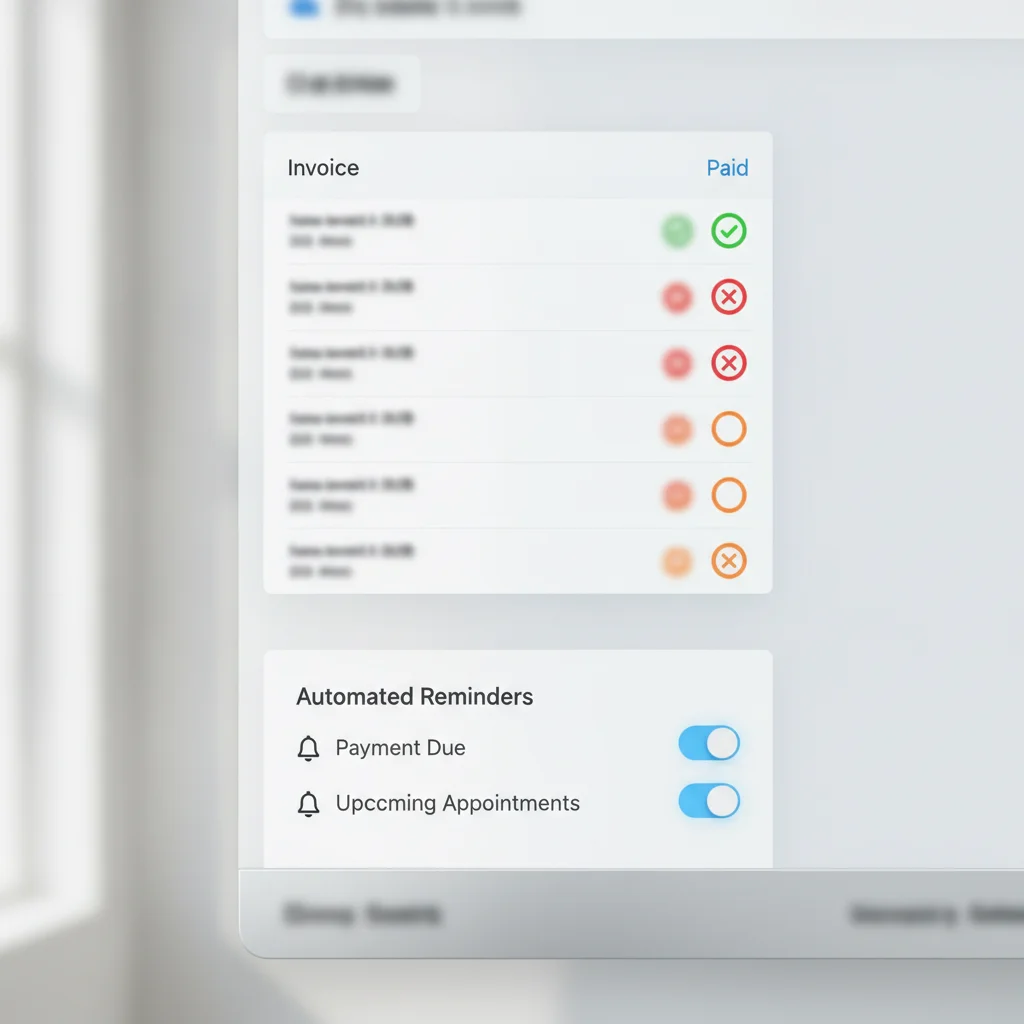
A dependable billing system treats Revenue as a unified pipeline. Each stage feeds directly into the next.
1. Pre-Visit Eligibility and Benefit Verification
Billing starts long before the diagnostic intake. Never wait until session two to learn that a client has an unmet $5,000 deductible. Checking behavioral health coverage, copays, and prior authorization rules up front spares you difficult financial conversations later.
2. Charge Capture and Documentation
Accurate claims demand complete documentation. Every claim ties an ICD-10 diagnosis to a specific CPT code, like 90834 or 90837. If your notes run late, your cash flow stops. Finishing progress notes the day you see clients keeps the billing line moving.
3. Electronic Claim Scrubbing and Submission
Clean claims get paid fast. Manual entries and clunky third-party portals invite formatting errors. Modern software translates your diagnosis, taxonomy codes, and modifiers into an electronic 837P file that clearinghouses check and approve in seconds.
4. Payment Posting and Remittance Processing
Payers deliver an Electronic Remittance Advice (ERA) to explain approved payouts, contractual write-offs, and patient responsibility. Instead of hand-entering these adjustments into ledgers, an integrated system posts ERAs directly to appointment records and flags remaining balances automatically.
5. Patient Collections and Aging Recovery
Collecting patient balances at the time of service prevents bad debt write-offs. The longer an unpaid copay sits on your books, the less likely you are to see that money. Automated reminders prompt clients to pay their share without forcing you to act like a collection agency.
How Can Practices Fix Billing Workflow Optimization?
Stop billing patients weeks after their sessions. Invoicing via month-end paper statements yields dismal collection rates. Require a payment card on file during intake and charge balances within 24 hours of session completion or ERA posting.
Research published in The Importance of Revenue Cycle Management (Harvard Business Review) confirms that healthcare organizations that clean up intake and capture billing up front build financial durability while cutting administrative waste. That same discipline gives Private Practices reliable cash flow.
The 4-Step Standard Operating Procedure for Daily Billing
- Mandatory Digital Intake (Day 0): Require clients to complete intake paperwork, review your financial policies, and save payment details before they ever sit on your couch.
- Concurrent Note Completion (Day of Session): Finish progress notes right after the session. An AI scribe captures the clinical details immediately so you can stay fully present with your client.
- Batch Claim Submission (Every 24 to 48 Hours): Don’t let clean claims pile up on your desk. Transmit electronic batches daily or every other day to catch formatting issues early.
- Automated Balance Follow-Ups (Post-ERA): As soon as an ERA assigns coinsurance or deductible amounts to a client, send an automated text or email alert. Clients can tap the secure link and pay their balance in seconds.
Hypnotes Tools That Drive Private Practice Billing Automation

Hypnotes connects clinical workflows directly to billing tools. You don’t have to patch together separate apps for telehealth, notes, and invoicing—everything lives in one HIPAA-compliant system.
Running your practice from an all-in-one platform eliminates the friction points that delay reimbursement. See how the platform fits together by reviewing Hypnotes practice Management features:
- Integrated Insurance Billing: Generate, scrub, and track insurance claims straight from calendar events without double data entry.
- AI Scribe and AI Billing Assistant: Turn session conversations into organized clinical documentation in minutes, speeding up billing while cutting down documentation burnout.
- Automated Therapist Payment Reminders: Set up automated SMS and email notifications that send secure payment links whenever a client owes a balance.
- Online Forms and Surveys: Collect insurance cards, demographics, and consent signatures before the first appointment.
- Telehealth with Document Sharing: Run secure video sessions with notes and billing records open on the exact same screen.
| Workflow Step | Manual / Fragmented Method | Hypnotes Automated System |
|---|---|---|
| Intake & Insurance | Paper intake forms, manual benefit calling | Digital intake forms and stored card on file |
| Documentation | Handwritten notes, hours of weekend typing | AI Scribe note generation right after sessions |
| Claim Generation | Manual re-entry into outside clearinghouses | Single-click batch claim creation from calendar |
| Payment Follow-Up | Awkward in-person asks or missed invoices | Automated SMS/email payment notifications |
3 Financial Metrics Every Private Practice Must Track
Don’t gauge practice health solely by your bank balance. A decent checking account balance can disguise mounting unpaid claims and slow collections. Track these three indicators instead:
1. Days in Accounts Receivable (A/R)
Days in A/R calculates the average wait between completing an appointment and receiving payment. Take your total open accounts receivable and divide it by your average daily Revenue. Keep your Private practice days in accounts receivable under 35 days to protect your cash flow. If your average climbs past 50 days, your claim submissions or client collection routines need immediate work.
2. First-Pass Clean Claim Rate
This percentage measures the claims paid on your initial submission without denials or manual rework. Target a clean claim rate of 95% or higher. When this number drops, review your clinical modifiers, diagnosis coding, or intake data collection for repeat errors.
3. Net Collection Rate
Net collection rate reveals the share of collectible dollars you deposit after contractual payer write-offs. Aim for 96% to 99%. A lower rate means uncollected copays, ignored deductibles, or unappealed claim rejections are draining your practice Revenue.
Frequently Asked Questions
What causes the most billing delays in Private Therapy Practices?
Unverified insurance coverage before the initial session and late clinical note completion cause the majority of claim delays and denials.
How does automated practice Management software reduce days in accounts receivable?
It submits claims immediately upon note sign-off, charges cards on file automatically, and sends instant text or email balance alerts to clients.
When should a Private practice therapist collect client copays?
Practices should collect copays and coinsurance automatically on the day of the appointment using a stored payment method to avoid chasing aging invoices.
Can solo Therapy Practices manage billing without hiring a dedicated billing service?
Yes. Integrated practice Management software with claim scrubbing and automated reminders lets solo practitioners handle their own billing in minutes each week.
Take Control of Your Practice Financials
Spend your energy helping clients instead of chasing invoices. Automate claims, documentation, and payment follow-ups using a single HIPAA-compliant workspace. Review the transparent Hypnotes pricing plans and start your 14-day free trial today.